This review is part of the Cat Series.
“Well, shall we go?” And the book starts with Satoru and his cat Nana travelled to places. They both visited Satoru’s friends in different cities of Japan. Nana, the pompous cat with a better fortune than the cat in Soseki’s, observed things around his owner. Adopted by Satoru at his adult age, Nana was a proud cat yet a sensible one. At first, their journey together seemed off. Why Satoru went through all the way asking his old friends if they could keep Nana? Why he gave up on Nana? The story flows into Satoru’s memories, his relationship with other people, the life once worth to lived. Satoru and Nana drove together in a silver van, seeing the panoramic view, shared the feeling of belonging. From the road, mountain, and sea–they reached the end of the quest, the horizon of death.
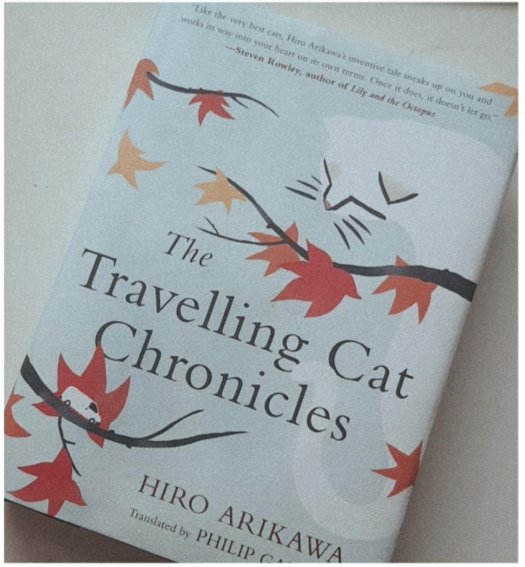
Arikawa has done a very good job in writing this warm story. With a nice translation by Philip Gabriel, we can see how her simple and plain style, also her double narratives bring well the story of genuine and emphatatic relationship. Satoru’s life was not an easy one. His parents were death in an accident, so he lived with her aunt who often moved around cities. The reunion with his old friends and finally returned to aunt Noriko’s house are a series of encounter for Nana to understand Satoru. Nana wanted to be Satoru’s companion, and througouth the story we can see the loving and caring qualities of Satoru in Nana too.
One of the scenes in the middle of the novel that make me teary is when Satoru brought Nana to beach and he was freaking out. As a cat, he felt threatened with the sea, ran straight up onto a pine tree. Not until Satoru rescued him that he got what the sea is.
“The sea is where you go reminisce when you far away from home. Delicacies of the sea are not something cats should catach by themselves. It’s quite acceptable to allow humans to prepare them for us.” (p. 121)
Nana was afraid but he wanted to understand Satoru’s feeling when they went to the beach. But it’s not just Nana. When they visited Satoru’s higschool friends, Sugi and Chikako who were now married, the feeling of care and wholesome-ness is also presence in Sugi. As he was often jealous with Satoru’s goodness, he wanted to be like him, so Chikako would love him. When Satoru said that he once liked Chikako too, Sugi was anxious. What would Chikako do? But this final confession of Satoru was trivial for Chikako. It was nice to be a young girl wavering between the affections of two boys. Sugi was not completely relieved but his inferiority and jealousy diminished. And his conclusion is what you can find best from a kind and caring person:
“The next time I see Satoru, I know I can be a much better friend. Now that is a happy thought.” (p. 177)
This is why I really love this book and ended up crying. It tells a story of gratefulness of being loved by someone else even life gives you a harsh beginning. In a moving way, the book gives us the possibility of affection not only between human and animals. but also among human themselves. Animals know affection when the human do so. They care when human care.
We can quite similar theme of human/animals relationship, and perhaps we are tempted to say “this is Hachiko all over again.” But I think the strengthness of this novel lays on Hirakawa’s patient pace to move the story around back and forth between human and animals. Readers may grow attachment not only to Nana but also to Satoru, aunt Noriko, and other characters on the novel. As the novel comes near close:
“… it’s not something to be sad about. As we count up memories from one journey, we head off on another. Remembering those who went head. Remembering those who will follow after. And someday, we will meet all those people again, out beyond the horizon.” (p. 277)
Arikawa writes compassionately about the cylical passage of life, the journey has come to an end, to be started again.
 Nik Setiadarma